


Looking Back
The Tursio Journey
Published: January 1, 2026
Share this post



Data is to businesses like corals are to seas -- critical, fascinating, and full of potential. In fact, just like corals, data systems and technologies have stayed relevant even as the world kept looping through successive technology cycles, including mainframe, desktop, web, mobile, cloud, and now AI. Shi and I saw the opportunity with data transitioning into AI when we started Tursio. We had earlier spent 7 years working together on making data systems workload-driven at Microsoft, before spending a year building a Snowflake workload optimizer at Keebo. Tursio was intended to handle the new wave of AI workloads that were imminent. We look back at our journey in this blog.
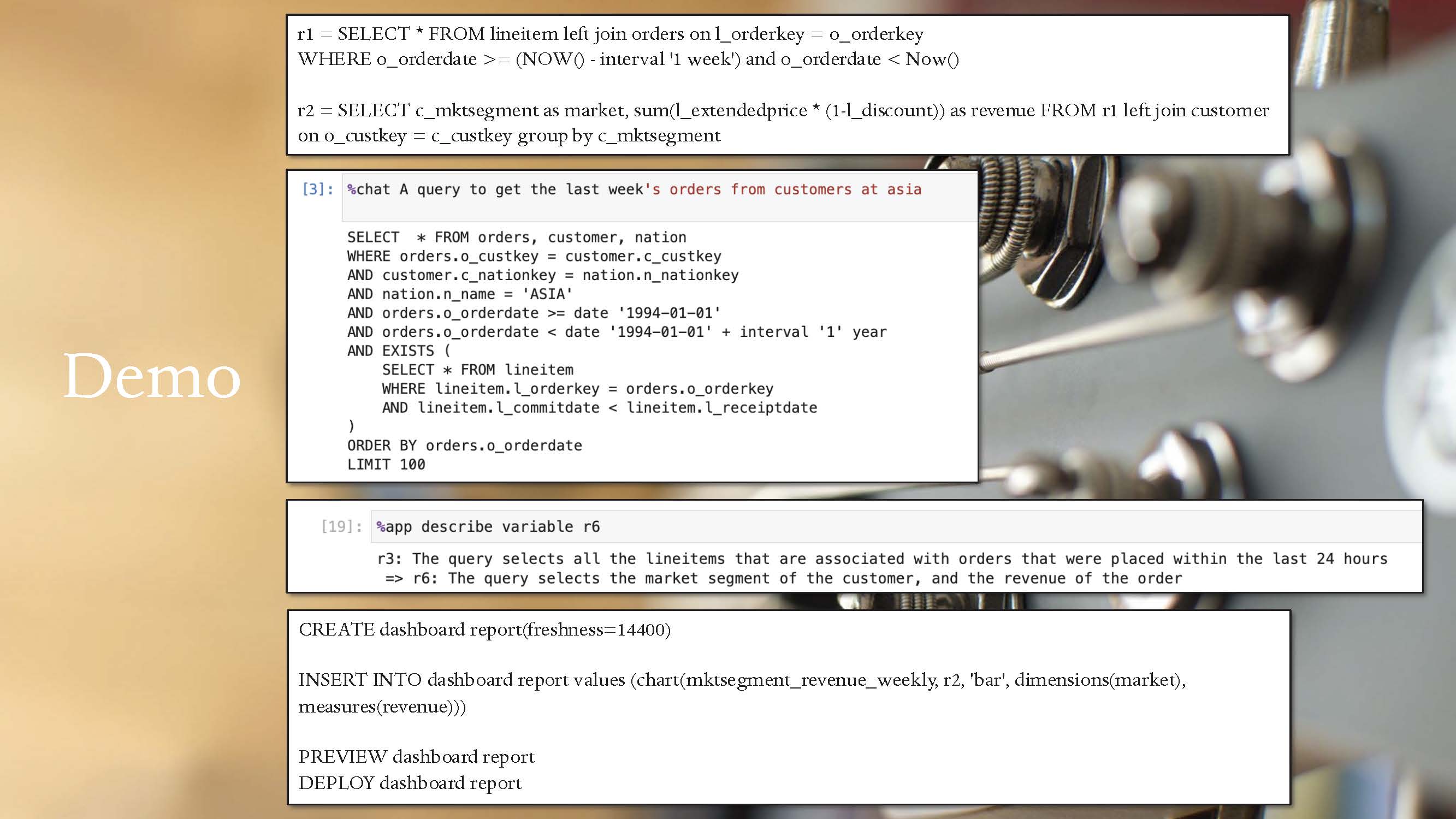
The screenshot below from 2022 shows our earliest demo in a Jupyter Notebook. It defines data models (using SQL or natural language) and creates a dashboard report with freshness declaratively, coined application query language (AQL). We called this new way of building applications “Smart Apps”, which was also the former name of Tursio.
This new app-building process involves two distinctive steps, context building and generative actions, shown in another screenshot from 2022 below. The context is needed before the actions can be performed.

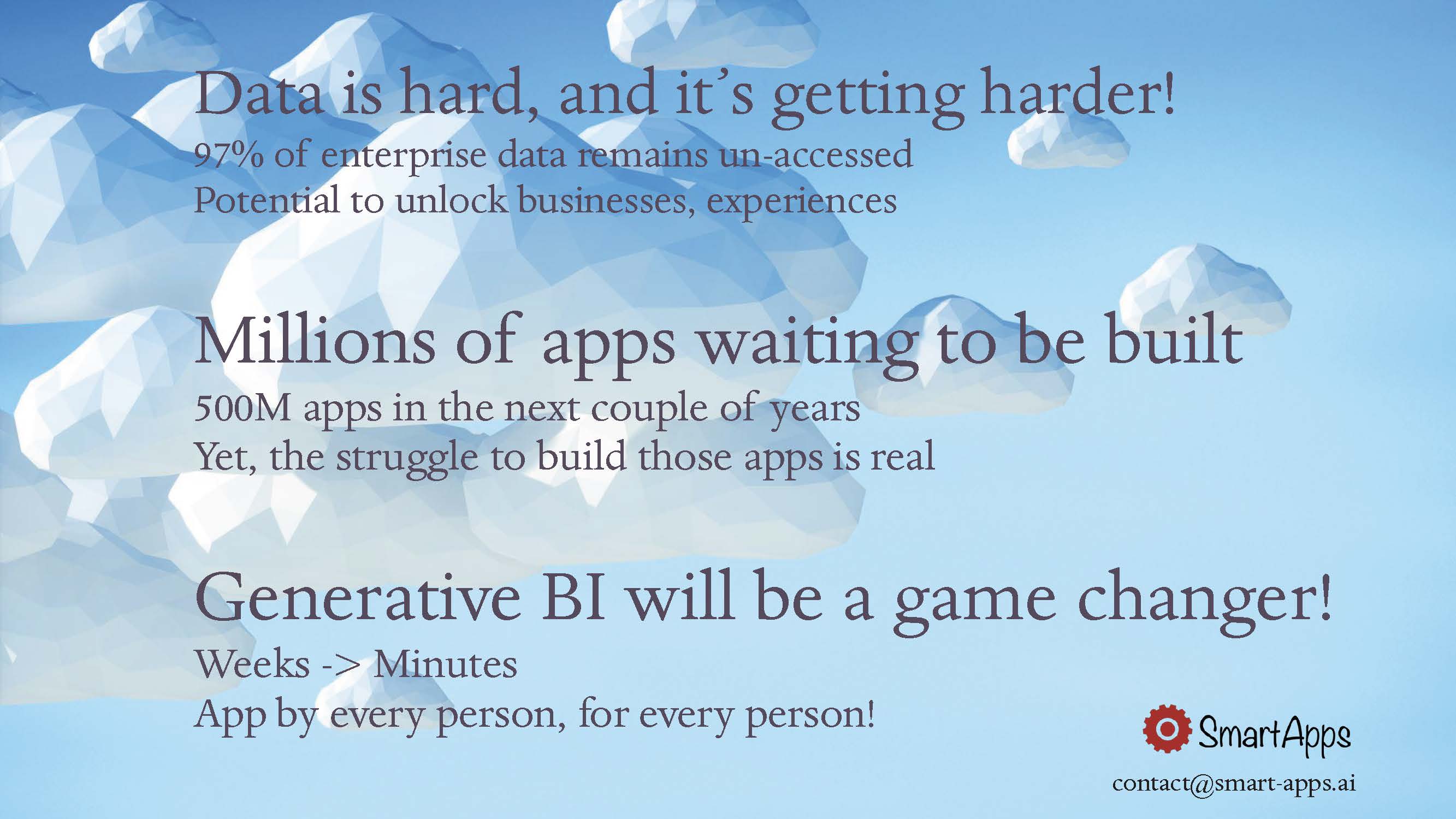
Ultimately, the goal was to accelerate the app-building process, helping build various kinds of apps interactively, i.e., "app by every person and for every person".
Given these observations, in 2023, we evolved the declarative interface into a large data model (LDM) that pre-generates a large set of valid data transformations. User questions map to the nearest data model as the starting point that they can chat with, refine, visualize, or even operationalize as a scheduled job. This was codenamed “Rainier” and the company was rechristened as “Tursio”.
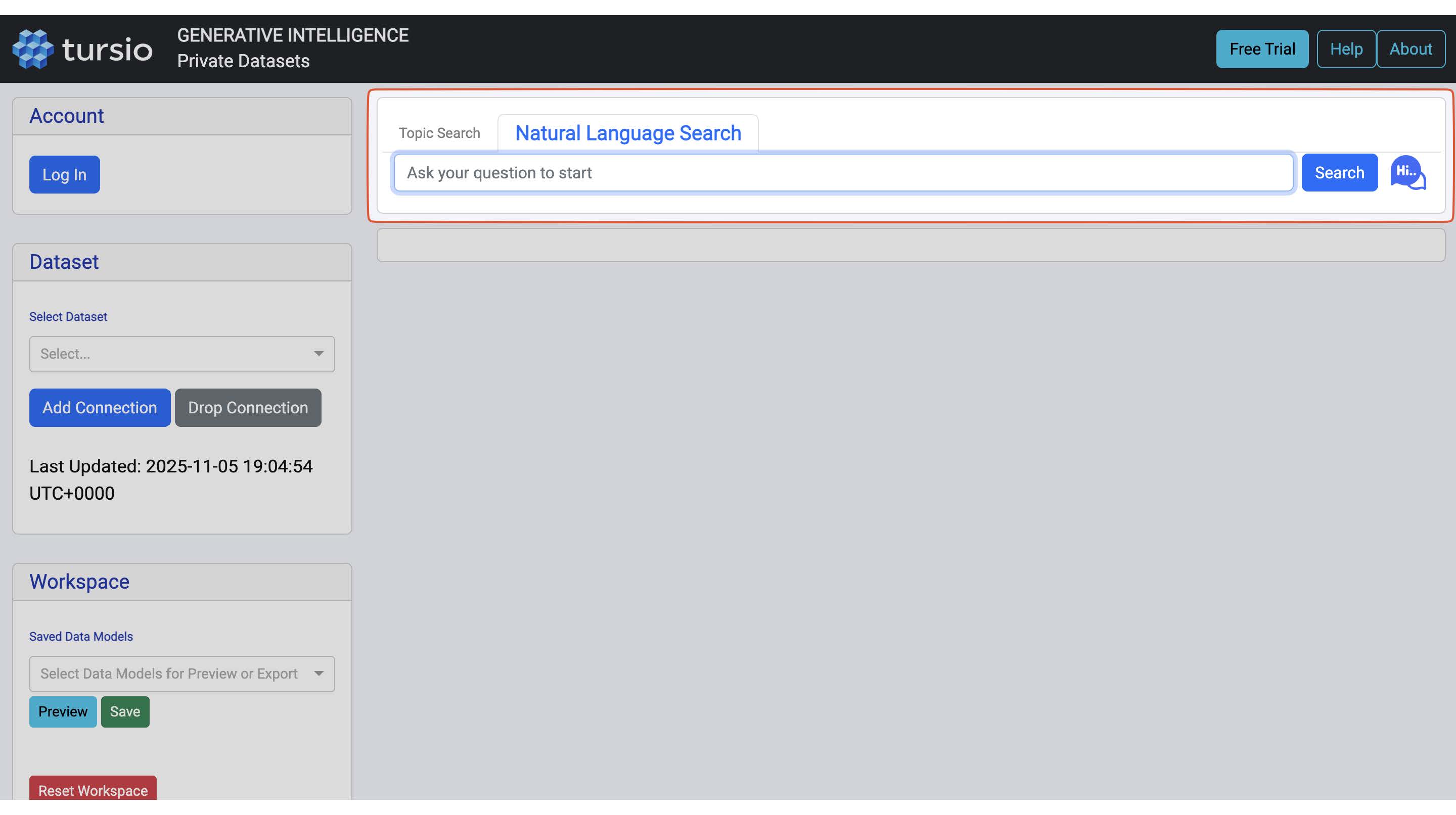
The screenshot below shows Rainier as a generative business intelligence platform. It supported connections from Snowflake database and dynamically generated all data models, visualizations, and workflows.
Therefore, in 2024, we evolved our large data model into a database context that is inferred without moving the data outside, i.e., turning existing databases into AI machines. We used this context to interpret user questions into database operators and construct valid operator trees that could be executed as SQL queries.
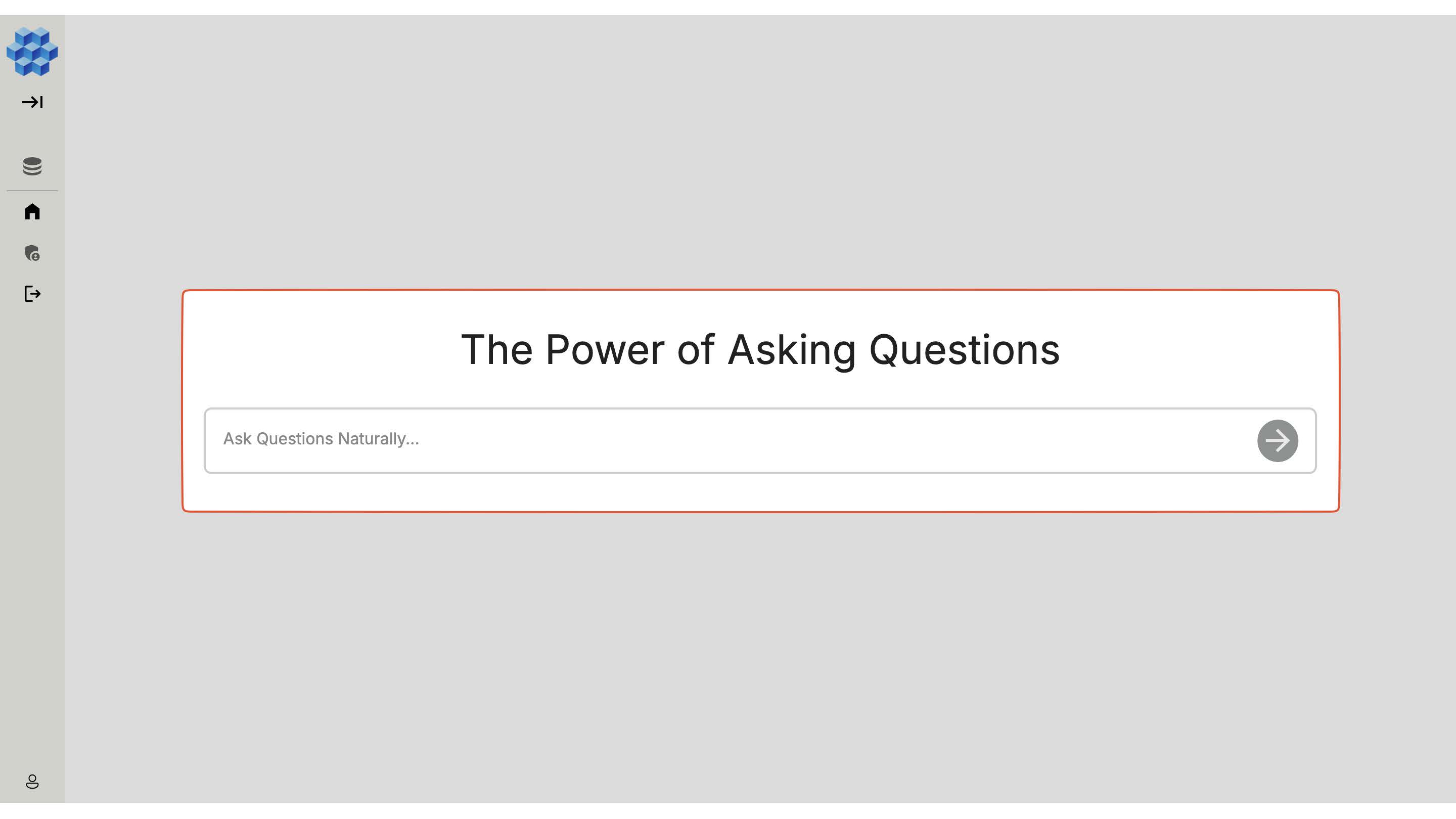
The screenshot below shows this new version, giving users the power to ask their questions instead of simply retrieving pre-generated data models.
Given these challenges, in 2025, we further evolved the database context into a semantic knowledge graph that simplifies schemas, adds descriptions, identifies relationships and ontologies, and detects rules for aggregations, aliasing, formatting, etc. Basically, we minimize the ambiguity in data with an automatically generated semantic graph for answering user questions. At query time, apart from generating the base queries, we also rewrite them extensively to match the user intent as closely as possible.
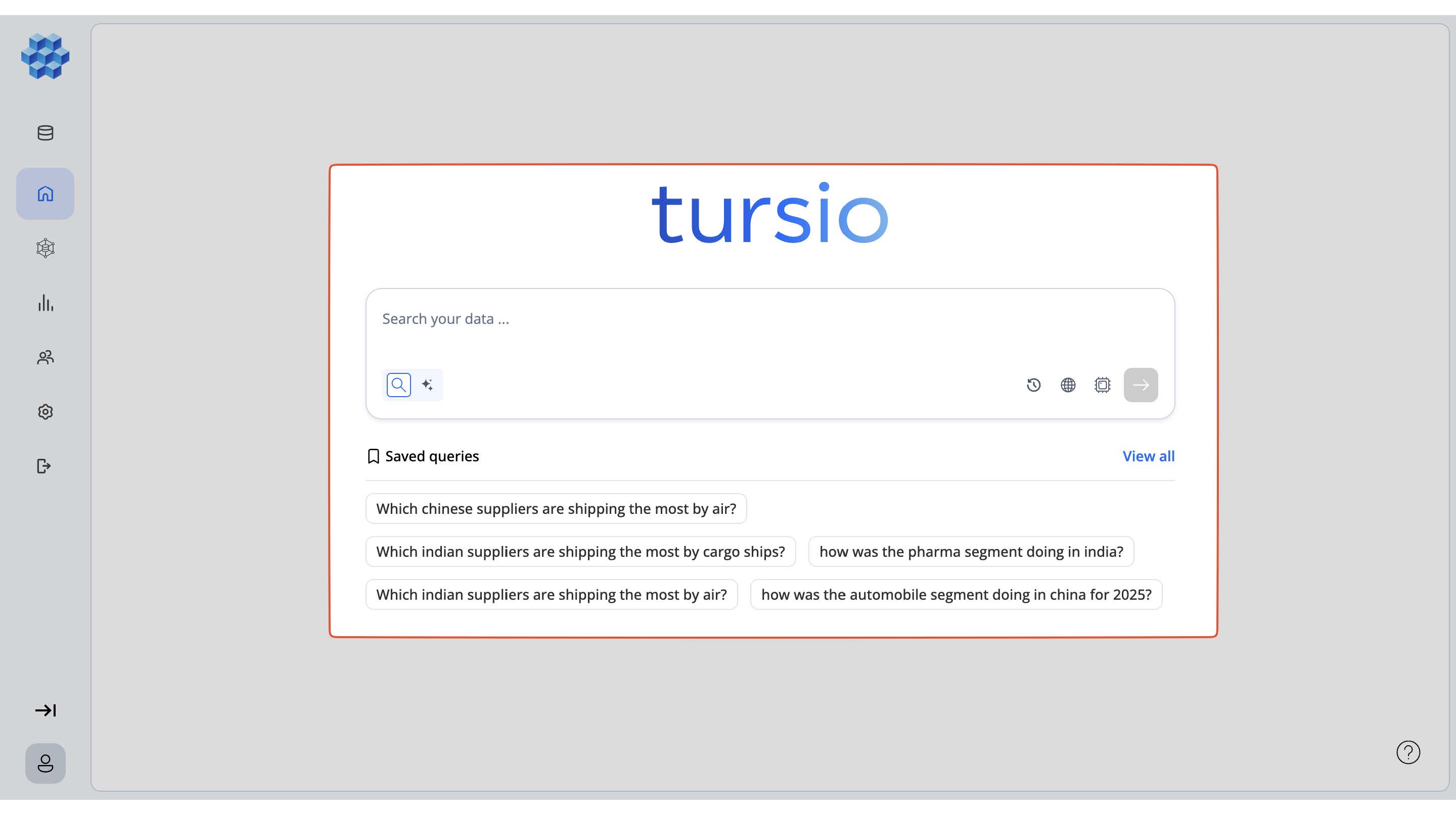
The screenshot below shows our structured data search, which can answer free-form and even open-ended questions using an elaborate semantic knowledge graph. It supports all major databases and data warehouses, is packaged for on-premises deployment, and brings down the onboarding time from months to 30 minutes.
Overall, we have remained true to our genesis of making applications easier by hiding data complexity. Our long journey, from declarative interfaces and large data models to database context, semantic knowledge graphs, and now context graphs for agents, has consistently strengthened our core proposition: letting data breathe life into organizations, much like corals do for the seas.
Building on.
2022: Smart applications
Our initial idea at the end of 2022 was to make applications smarter. We noted that a mountain of applications was waiting to be built in the new AI era, and they will be powered by data and AI to deliver modern business experiences. However, they require tedious data transformations and complex workflows that are slow and inefficient. Our approach was to hide data complexity with a declarative interface where non-experts can build apps easily by specifying "what" and not "how".The screenshot below from 2022 shows our earliest demo in a Jupyter Notebook. It defines data models (using SQL or natural language) and creates a dashboard report with freshness declaratively, coined application query language (AQL). We called this new way of building applications “Smart Apps”, which was also the former name of Tursio.
This new app-building process involves two distinctive steps, context building and generative actions, shown in another screenshot from 2022 below. The context is needed before the actions can be performed.
Ultimately, the goal was to accelerate the app-building process, helping build various kinds of apps interactively, i.e., "app by every person and for every person".
2023: Generating BI using AI
We started doing customer interviews with our initial prototype and quickly learned that an expert developer interface for a non-expert user was a paradox. Also, while the BI applications default to dashboards, people typically end up with too many dashboards, and they soon stop caring about them. So, the traditional app is now better off being a dynamically generated workflow that people can persist if needed.Given these observations, in 2023, we evolved the declarative interface into a large data model (LDM) that pre-generates a large set of valid data transformations. User questions map to the nearest data model as the starting point that they can chat with, refine, visualize, or even operationalize as a scheduled job. This was codenamed “Rainier” and the company was rechristened as “Tursio”.
The screenshot below shows Rainier as a generative business intelligence platform. It supported connections from Snowflake database and dynamically generated all data models, visualizations, and workflows.
2024: Databases as AI machines
Data models generated by Rainier were always correct. However, they failed to capture the user intent accurately in many cases. That required users to modify the retrieved data models, which was again tedious. Clearly, we needed to evolve into more general natural language querying using context from the database. The prevalent approach for gathering context from enterprise data was using retrieval augmented generation (RAG). Unfortunately, that moves data into a vector database, which is both complex and expensive for structured data.Therefore, in 2024, we evolved our large data model into a database context that is inferred without moving the data outside, i.e., turning existing databases into AI machines. We used this context to interpret user questions into database operators and construct valid operator trees that could be executed as SQL queries.
The screenshot below shows this new version, giving users the power to ask their questions instead of simply retrieving pre-generated data models.
2025: Structured data search
Our approach of strictly grounding user queries in the database context makes queries natural, but they cannot be expressive enough. Well-understood question patterns could be answered perfectly, but they would quickly fall off the cliff when the questions were phrased differently. Furthermore, data models in the context needed manual curation, which turned out to be a major challenge. Altogether, our approach required white-glove onboarding with long engagement cycles that were hard to replicate.Given these challenges, in 2025, we further evolved the database context into a semantic knowledge graph that simplifies schemas, adds descriptions, identifies relationships and ontologies, and detects rules for aggregations, aliasing, formatting, etc. Basically, we minimize the ambiguity in data with an automatically generated semantic graph for answering user questions. At query time, apart from generating the base queries, we also rewrite them extensively to match the user intent as closely as possible.
The screenshot below shows our structured data search, which can answer free-form and even open-ended questions using an elaborate semantic knowledge graph. It supports all major databases and data warehouses, is packaged for on-premises deployment, and brings down the onboarding time from months to 30 minutes.
2026: Context graph for agents
Future applications are going to be powered by agents. Naturally, then, exposing our semantic knowledge graph along with all its interactions is the logical next step in 2026. It will provide agents the context needed to drive rich user experiences that are still grounded in enterprise data. Therefore, this year will see APIs for accessing and querying the semantic knowledge graph; furthermore, we will expose Tursio as MCP and Skills that could be then connected with popular AI frontends such as ChatGPT, Claude, etc.Overall, we have remained true to our genesis of making applications easier by hiding data complexity. Our long journey, from declarative interfaces and large data models to database context, semantic knowledge graphs, and now context graphs for agents, has consistently strengthened our core proposition: letting data breathe life into organizations, much like corals do for the seas.
Building on.
Related blog posts

Tuning LLM Calls for Predictable Outputs
Output parser is a critical choice in LLM calls and they decides whether your responses are cheap and reliable.
Shivani Tripathi
Read more
Token Costs for AI/BI
Token costs is a growing concern with the recent popularity of AI/BI. While vendors like Databricks and Snowflake have their embedded AI/BI solutions, we compare their costs with a database-agnostic approach.
Alekh Jindal
Read more

Context Tuning for Enterprise Data
Context is the most valuable commodity in enterprise AI, Tursio combines automatic inference with business artifacts and people's knowledge to make it usable.
Alekh Jindal, Wangda Zhang
Read more
Bring search to your
workflows
workflows
See how Tursio helps you work faster, smarter, and more securely.




'/%3e%3c/g%3e%3cdefs%3e%3clinearGradient%20id='paint0_linear_7851_102227'%20x1='0'%20y1='174.933'%20x2='1312'%20y2='174.933'%20gradientUnits='userSpaceOnUse'%3e%3cstop%20stop-color='%231E4EC4'/%3e%3cstop%20offset='0.8'%20stop-color='%230D6EFD'/%3e%3cstop%20offset='1'%20stop-color='%235BC0EB'/%3e%3c/linearGradient%3e%3c/defs%3e%3c/svg%3e)