


Databases
Generative AI
Enterprise Search on Structured Data
Published: July 23, 2025
Share this post


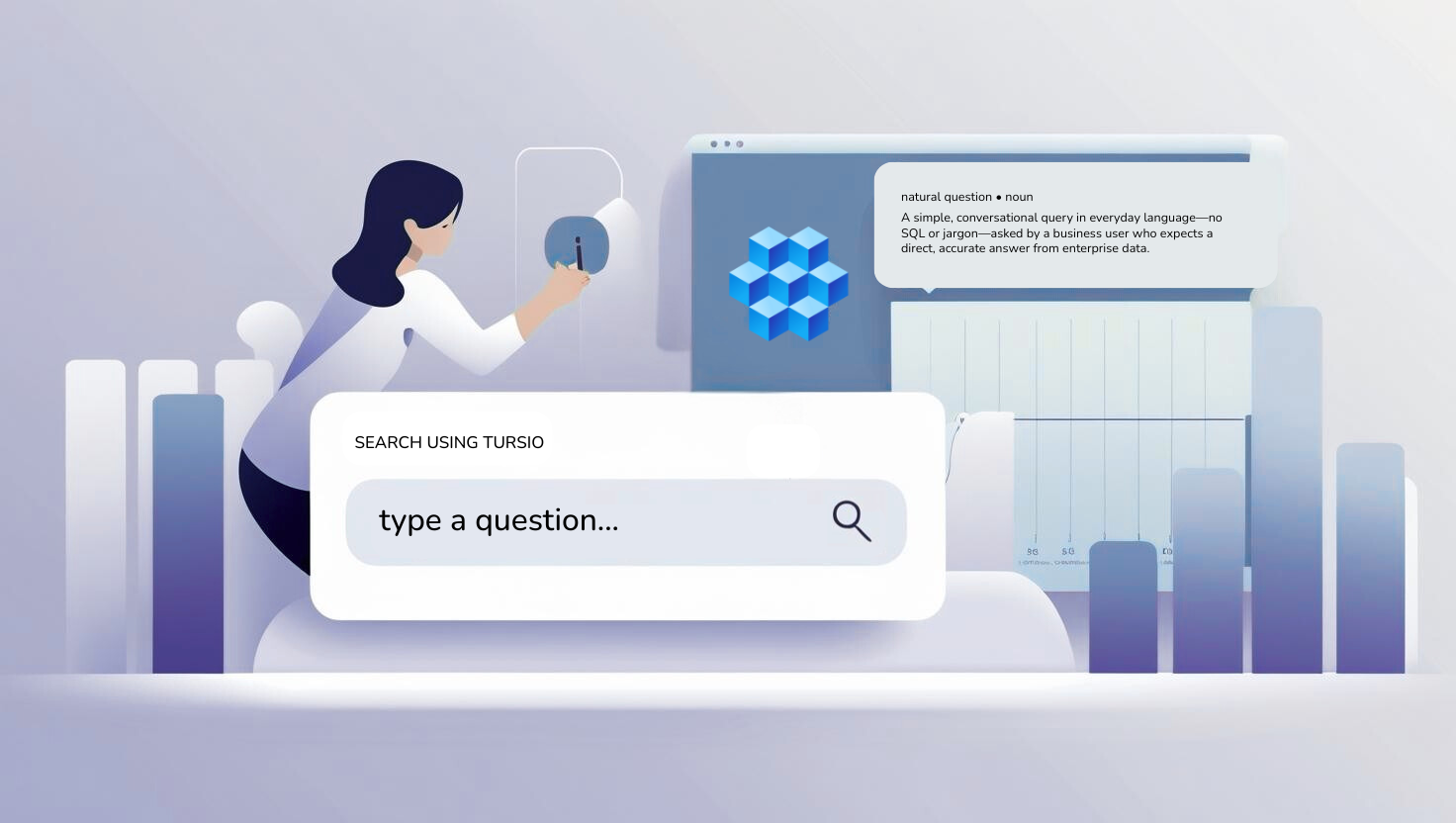
Generative AI is unleashing a new generation of go-getters who believe in getting things done faster than ever before. Most of the success stories leverage pre-trained large language models (LLMs) for personal productivity tasks such as writing, designing, coding, reporting, and web search.
However, when it comes to business applications, like analyzing products, supporting customers, or running operations, pre-trained models start to fall short. That’s because these tasks depend on structured enterprise data, typically stored as systems of record in relational databases, which generic AI models can’t access or understand easily. Pulling relevant pieces of information, aka enterprise search, from structured databases, is critical to assisting in these tasks.
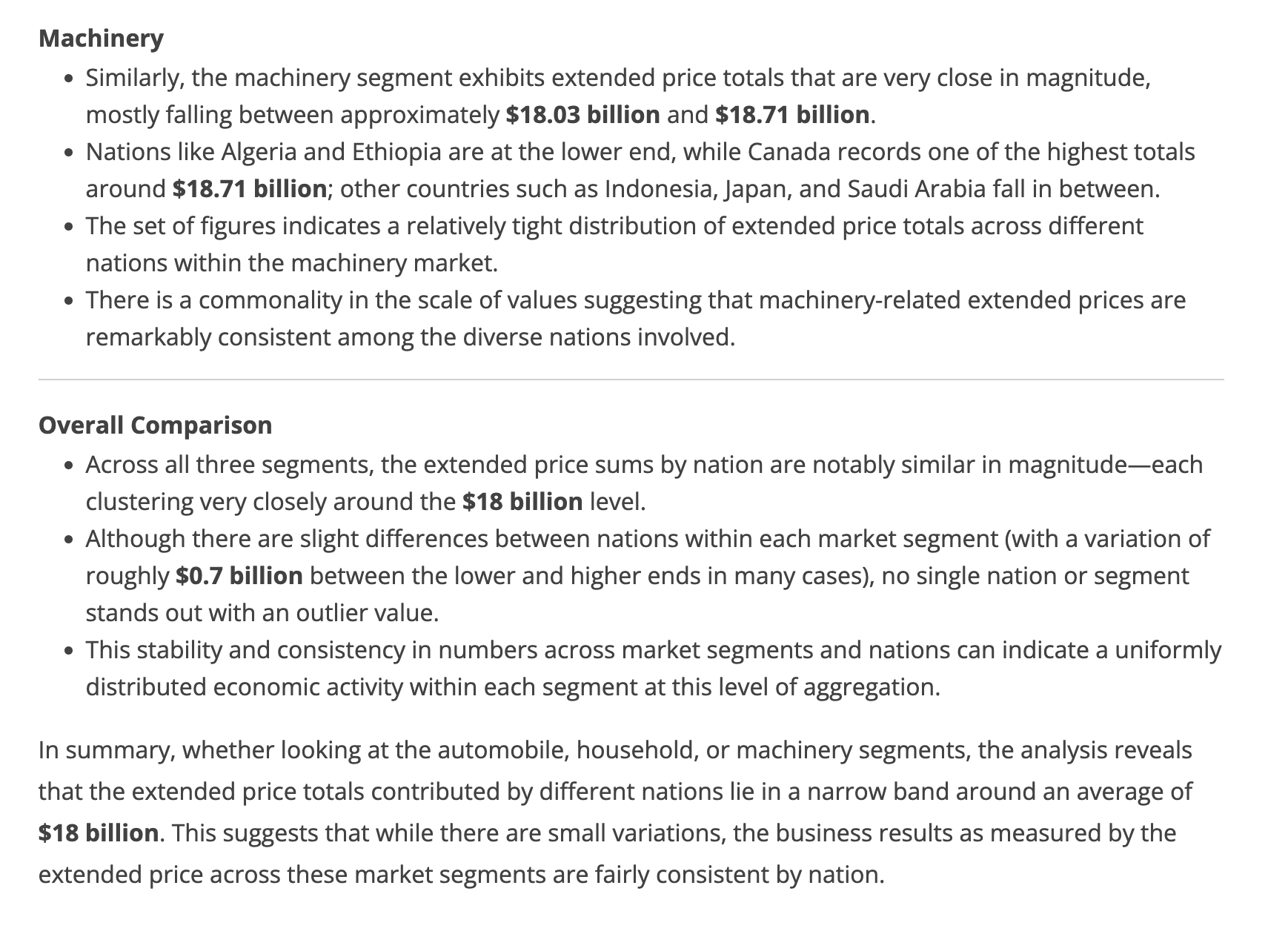
For example, using Tursio to analyze the extended price for Automobile, Household, and Machinery segments in different nations presents a detailed analysis like below:

To illustrate, Tursio interprets queries consistently, every single time, and provides step by step explainability as follows:

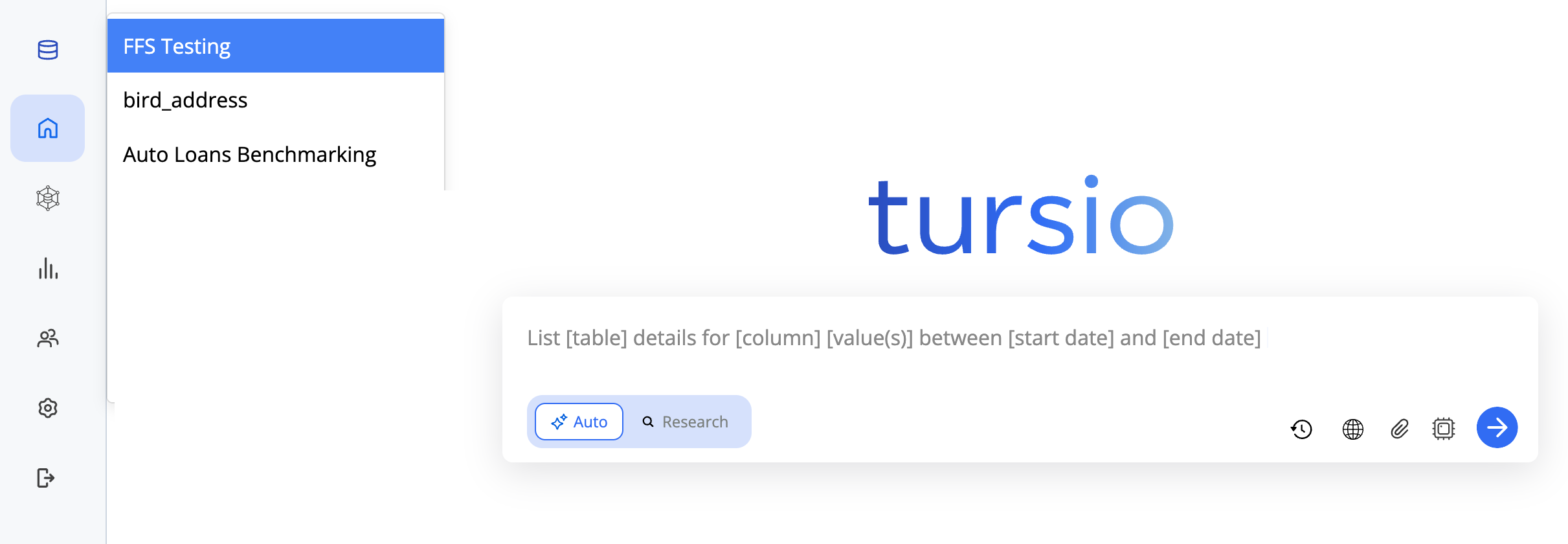
Tursio solves this by providing a search box with auto-prompting to help users navigate through their questions:

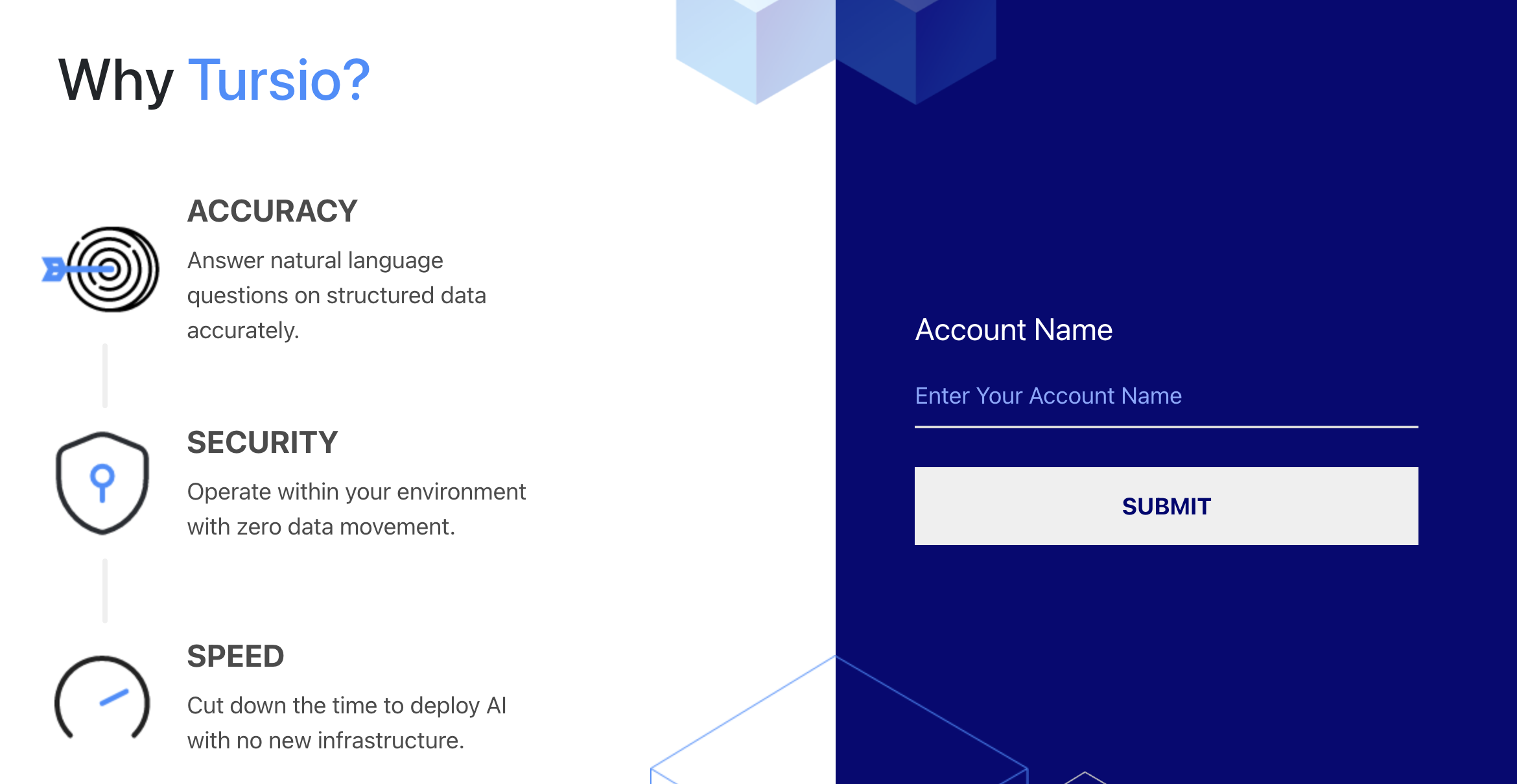
Tursio has crafted a simple straightforward interface to connect databases, run training, and start asking questions within minutes, a fully managed experience with no complexity or security risk:
Tursio allows adding connections to all major databases and then switching them freely at query time to use the exact same search box for the exact same experience!
Structured databases have long been expert systems accessible to a chosen few. They now need to open up to everyone -- a single search box to serve them all.
Note: Tursio helps customers deploy proprietary enterprise search for their verticals. Please reach out at contact@tursio.ai if you are interested in learning more.
However, when it comes to business applications, like analyzing products, supporting customers, or running operations, pre-trained models start to fall short. That’s because these tasks depend on structured enterprise data, typically stored as systems of record in relational databases, which generic AI models can’t access or understand easily. Pulling relevant pieces of information, aka enterprise search, from structured databases, is critical to assisting in these tasks.
Current Patterns
Traditional enterprise search is built around unstructured data, like documents, text, images, emails, and relies on keyword-based retrieval, e.g., Elastic, Glean, and even Notion. Structured data, on the other hand, needs valid transformations before it can be retrieved, which often makes the search process error prone. Popular approaches to improve accuracy include treating structured data as training input, as unstructured embeddings, and as prompt for text-to-SQL.Treating as Training Input
Since pre-training is falling short, an obvious solution is to fine-tune the model on structured data (see Lamini memory tuning). This is a seemingly good approach, but it is not scalable on several counts: (i) fine-tuning is expensive on large databases that keep on changing all the time, (ii) the space is too large and even very large databases end up being very sparse, (iii) shifting probabilities to recall the database facts does not consider transformation of those facts, and (iv) fine-tuning still does not guarantee the transformations on structured data to be correct.Treating as Unstructured Embeddings
Another popular approach is retrieval augmented generation (RAG), i.e., converting structured data into unstructured embeddings and retrieving relevant portions in response to queries. Popular vector databases for managing these embeddings include Pinecone, Weaviate, and Qdrant. Similar to fine-tuning, RAG also has cost issues, accuracy issues, and data transformation issues. Additionally, the embedding model itself needs to be tuned to the database at hand for the embeddings to be differentiated. Overall, RAG adds significant infrastructure overheads and long implementation cycles.Treating as Prompts for Text-to-SQL
Finally, the third popular approach is text-to-SQL, i.e., prompt pre-trained language models with sufficient context to generate SQL queries. The context could include database schemas, sample values, examples of queries, and so on. While this method is completely lightweight, text-to-SQL suffers accuracy issues, with the leaderboard accuracy on BIRD-SQL benchmark hovering around 77%. This is unacceptable for enterprise users who may not know when to trust the results.What do people really want?
Stepping into the user's shoes, let us consider what they really want.Answers, answers, answers!
Ultimately, business users care about getting answers to their questions, either to consume directly or to feed into other business applications. Most of these users are not equipped to verify SQL statements, and so text-to-SQL with inaccuracies built-in does not fly. Even presenting tables and charts isn’t enough. It still puts the burden on the user to interpret and derive conclusions. What they really need is direct, trustworthy answers. Table augmented generation (TAG) is once such approach.For example, using Tursio to analyze the extended price for Automobile, Household, and Machinery segments in different nations presents a detailed analysis like below:
Better make sure the answers are correct
Users don’t just want answers, they want answers they can trust every single time. That means responses must be factually correct and explainable, step by step. While the presentation can vary, just like asking the same question to different people in a boardroom who describe the same thing differently, the underlying facts must be the same.To illustrate, Tursio interprets queries consistently, every single time, and provides step by step explainability as follows:
People don't really know how to ask
Structured data is complex and most business users don't know how to ask what they are looking for. Instead of teaching them how to ask, they need to be guided to sufficient clarity that leads to the right database question/SQL. Once the right data is at hand, the business users know what they want and must have the freedom to express themselves.Tursio solves this by providing a search box with auto-prompting to help users navigate through their questions:
Need to work out of the box
AI is exciting but it is also extremely hard to get it working. No wonder most AI POCs fail, and so it is imperative for enterprise search on structured data to work out of the box. Business users have neither the expertise nor the patience to tune their search experience.Tursio has crafted a simple straightforward interface to connect databases, run training, and start asking questions within minutes, a fully managed experience with no complexity or security risk:
Single search box to rule them all
Most businesses use multiple database backends and want to search for them all at the same place. Furthermore, they want the search box to be pluggable into their existing applications.Tursio allows adding connections to all major databases and then switching them freely at query time to use the exact same search box for the exact same experience!
Putting it all together
Clearly, enterprise search on structured data is picking up. But let's also think about what it means.What makes structured data different?
Enterprise search on structure data is not for developers trying to learn and build the best SQLs; that is one extreme. It's also not a replacement for dashboards; you still need them for good reasons; this is the other extreme. Rather, enterprise search on structured data is for everyone and everything in between: vast majority of people who are not SQL ninjas, but want to get answers fast. Answers to analyze products, understand customers, research markets, devise strategies, and so on, basically anything that needs to be grounded in your company and your products.Where are we heading to?
We are witnessing a transformational shift in our software stack, one that is catering to the needs of a new generation of go-getters. They want things to be fast, unified, and simplified.Structured databases have long been expert systems accessible to a chosen few. They now need to open up to everyone -- a single search box to serve them all.
Note: Tursio helps customers deploy proprietary enterprise search for their verticals. Please reach out at contact@tursio.ai if you are interested in learning more.
Related blog posts

Tuning LLM Calls for Predictable Outputs
Output parser is a critical choice in LLM calls and they decides whether your responses are cheap and reliable.
Shivani Tripathi
Read more

Token Costs for AI/BI
Token costs is a growing concern with the recent popularity of AI/BI. While vendors like Databricks and Snowflake have their embedded AI/BI solutions, we compare their costs with a database-agnostic approach.
Alekh Jindal
Read more

Context Tuning for Enterprise Data
Context is the most valuable commodity in enterprise AI, Tursio combines automatic inference with business artifacts and people's knowledge to make it usable.
Alekh Jindal, Wangda Zhang
Read more
Bring search to your
workflows
workflows
See how Tursio helps you work faster, smarter, and more securely.




'/%3e%3c/g%3e%3cdefs%3e%3clinearGradient%20id='paint0_linear_7851_102227'%20x1='0'%20y1='174.933'%20x2='1312'%20y2='174.933'%20gradientUnits='userSpaceOnUse'%3e%3cstop%20stop-color='%231E4EC4'/%3e%3cstop%20offset='0.8'%20stop-color='%230D6EFD'/%3e%3cstop%20offset='1'%20stop-color='%235BC0EB'/%3e%3c/linearGradient%3e%3c/defs%3e%3c/svg%3e)